
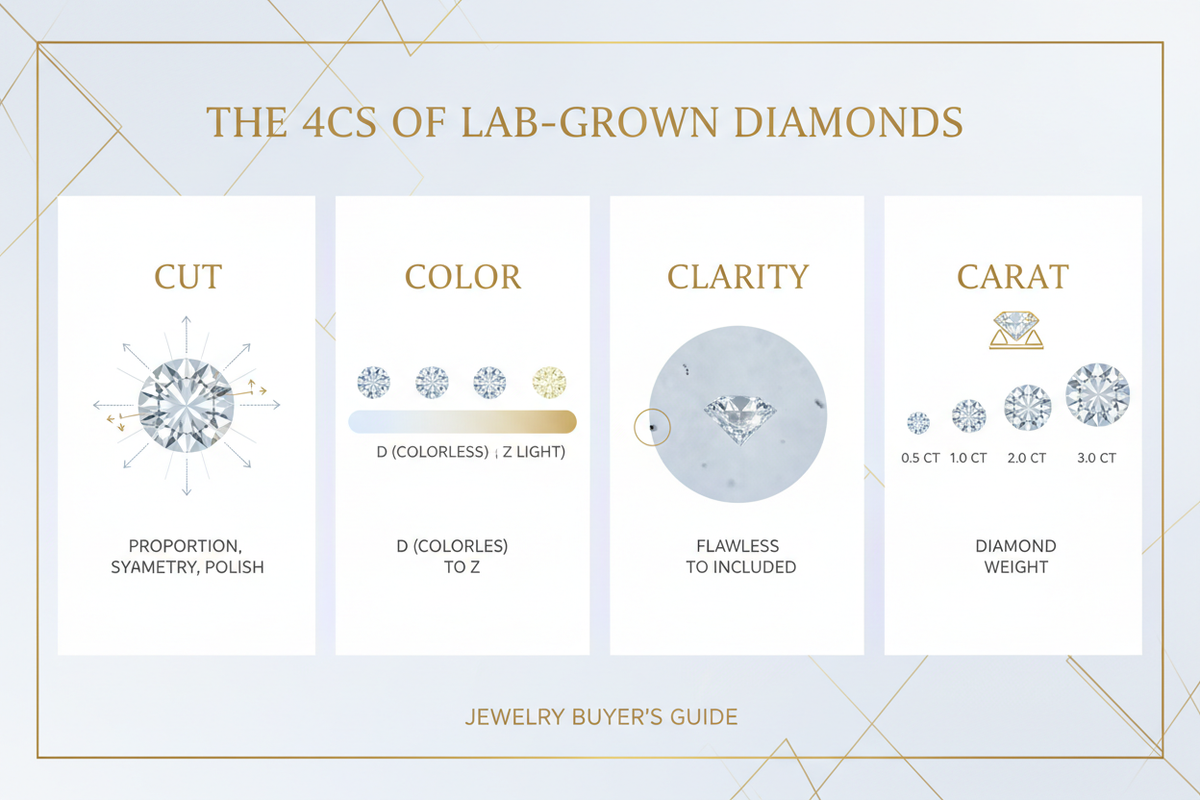
When it comes to choosing the perfect engagement ring, understanding the 4Cs—Cut, Color, Clarity, and Carat—is essential. While these principles were originally developed for natural diamonds, they apply equally to lab-grown diamonds, which are chemically and physically identical to their mined counterparts.
Lab-grown diamonds offer modern couples the ability to maximize size, quality, and ethical values without compromise. This guide will walk you through each “C” in detail, helping you make a confident, informed choice for your engagement ring.
Understanding Lab-Grown Diamonds

Lab-grown diamonds are created in controlled laboratory environments, using either High Pressure High Temperature (HPHT) or Chemical Vapor Deposition (CVD) methods. These processes produce diamonds that are virtually identical to natural diamonds in appearance, durability, and chemical structure.
-
HPHT: Mimics natural diamond formation under extreme pressure and heat.
-
CVD: Uses a carbon-rich gas environment to grow diamonds atom by atom.
Both methods create stones suitable for fine jewelry, heirloom-quality engagement rings, and precision-cut luxury pieces.
Why the 4Cs Still Matter
Even though lab-grown diamonds are identical to mined diamonds, the 4Cs framework remains the most trusted way to evaluate quality. Understanding these factors ensures that you select a diamond that offers optimal brilliance, aesthetic appeal, and value.
Cut: The Sparkle and Brilliance

What Is Cut?
Cut refers to how a diamond’s facets interact with light, influencing brilliance, fire, and scintillation. It is arguably the most important factor for overall beauty.
Key Considerations for Lab-Grown Diamonds
-
Precision: Lab-grown diamonds often feature modern, precision cutting techniques, which can enhance sparkle even in lower-carat stones.
-
Cut Grades: Commonly graded as Excellent, Very Good, Good, Fair, or Poor. An Excellent cut maximizes light reflection and fire.
-
Shape Impacts: Round, princess, oval, and cushion shapes each interact with light differently; choose based on finger shape, personal style, and setting preference.
Tips
-
Prioritize cut over carat weight for maximum visual impact.
-
For modern rings, consider shapes that enhance finger elongation and complement lifestyle.
Color: From Colorless to Warm Hues

Understanding Diamond Color
Color grades measure the presence of yellow or brown tints. The scale ranges from D (colorless) to Z (noticeable color).
Lab-Grown Diamond Considerations
-
Lab-grown diamonds are often purer, with fewer color variations due to controlled production.
-
Slightly warmer tones (G–H–I range) can add character and blend beautifully with vintage-inspired or champagne-colored rings.
Tips
-
Colorless (D–F) is ideal for traditional modern engagement rings.
-
Slight warmth can provide a softer, romantic aesthetic, particularly in rose or yellow gold settings.
Clarity: Evaluating Inclusions
What Is Clarity?
Clarity refers to internal imperfections (inclusions) or external blemishes. Natural diamonds are formed under high pressure over billions of years, so inclusions are common. Lab-grown diamonds may have unique inclusions from the growth process, but they are rarely visible to the naked eye.
Grading
-
FL (Flawless) & IF (Internally Flawless): No inclusions visible under 10x magnification.
-
VVS1–VVS2: Very, very slightly included—imperceptible without magnification.
-
VS1–VS2: Very slightly included; excellent for most rings.
-
SI1–SI2: Slightly included; may be noticeable under magnification but invisible to the naked eye.
Tips
-
Aim for VS clarity or higher for engagement rings to ensure brilliance and resale confidence.
-
Lab-grown diamonds allow you to maximize size and cut quality without spending excessively on clarity.
Carat: Size, Weight, and Proportion

What Is Carat?
Carat measures the weight of the diamond, not its visible size. However, cut proportions can make a diamond appear larger or smaller.
Lab-Grown Advantage
-
Lab-grown diamonds are more affordable per carat, allowing couples to select larger stones without exceeding their budget.
-
Larger stones in lab-grown diamonds often offer better value for quality, enabling superior cut or clarity choices alongside size.
Tips
-
Consider proportion and shape in addition to carat for optimal visual impact.
-
Balance size with cut, color, and clarity for a harmonious and sparkling engagement ring.
Certification: Ensuring Authenticity

Whether lab-grown or natural, a certified diamond verifies the 4Cs and origin.
Key Certifying Labs
-
IGI (International Gemological Institute): Widely recognized for lab-grown diamonds.
-
GIA (Gemological Institute of America): Trusted authority; offers grading for both natural and lab-grown diamonds.
Certification ensures transparency, peace of mind, and confidence in your purchase.
Combining the 4Cs for Maximum Value

For modern couples, the goal is to balance all four Cs to maximize beauty, value, and personal satisfaction.
-
Cut first: Ensures brilliance and sparkle.
-
Color second: Choose based on preference and metal color.
-
Clarity third: Look for inclusions that don’t affect visual beauty.
-
Carat last: Optimize for size within budget and proportion.
Lab-grown diamonds allow strategic prioritization: for instance, choosing a larger carat without sacrificing cut or clarity.
Ethical and Environmental Considerations
-
Lab-grown diamonds reduce ecological impact compared to mined diamonds.
-
Using recycled metals for settings further enhances sustainability.
-
Couples increasingly value transparency and responsible sourcing, aligning purchases with personal values.
Choosing a lab-grown diamond allows luxury without compromise.
Engagement Ring Design Tips with Lab-Grown Diamonds

Lab-grown diamonds are versatile and pair beautifully with a variety of settings:
-
Solitaire: Showcases the 4Cs clearly.
-
Halo & Hidden Halo: Enhances sparkle while complementing size.
-
Pave & Vintage-Inspired: Adds texture, character, and timeless elegance.
Design choice can accentuate the stone’s brilliance and highlight your unique style and lifestyle.
Caring for Your Lab-Grown Diamond
-
Daily Wear: Avoid harsh chemicals and remove rings during physical tasks.
-
Cleaning: Mild soap and a soft brush; professional cleaning annually.
-
Maintenance: Inspect prongs and settings regularly for security.
With proper care, a lab-grown diamond will retain sparkle and durability for generations.
Common Misconceptions About Lab-Grown Diamonds

-
“Lab-grown diamonds aren’t real.” False—they are chemically identical to natural diamonds.
-
“They are less luxurious.” Luxury is defined by quality, craftsmanship, and ethical values—not just origin.
-
“They have no resale value.” While secondary markets are developing, the emotional and ethical value is unmatched.
Educating yourself allows confident, empowered decisions.
Conclusion: Making an Informed Choice
The 4Cs framework provides a clear, structured approach to choosing a lab-grown diamond. By understanding Cut, Color, Clarity, and Carat, couples can select stones that are ethically responsible, visually stunning, and perfectly aligned with personal values.
Lab-grown diamonds offer modern luxury without compromise, allowing couples to maximize sparkle, size, and sustainability. By balancing the 4Cs, selecting certified stones, and choosing settings that reflect personal style, you can create an engagement ring that is timeless, meaningful, and beautiful.
Whether you ultimately choose lab-grown or natural, the most important factor is the love, intention, and story the ring represents.